


AES' visual identity guidelines
Photography
In our system, photography works to fully tell our stories to the world.

Our approach highlights every element of each project, leveraging both the innovation of our solutions and the humanity of our partnerships. It not only helps us to visualise the future of energy, but also to hero the customers, communities and countries that we partner with along the way.
Photography story
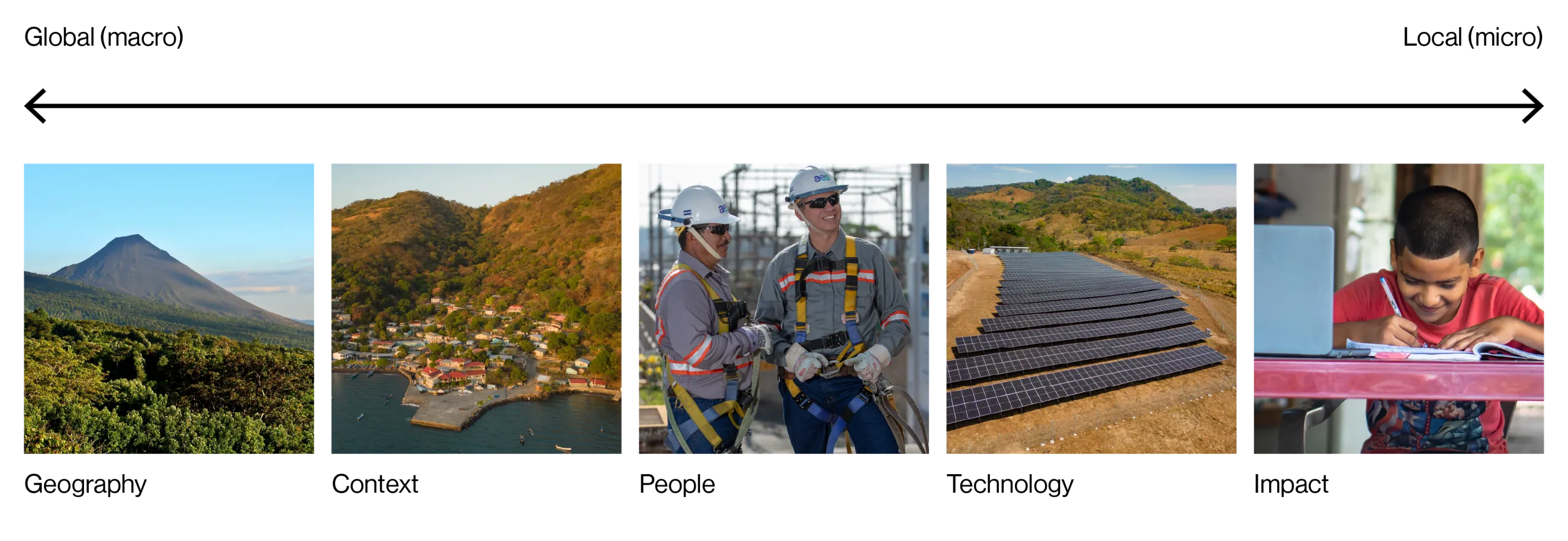
Our photography shows the stories that build AES. It showcases the breadth of our solutions on both a global and a local level—from macro to micro—and the resulting greater impact. We use five categories to structure our stories:
➔ Geography
➔ Context
➔ People
➔ Technology
➔ Impact
Categories
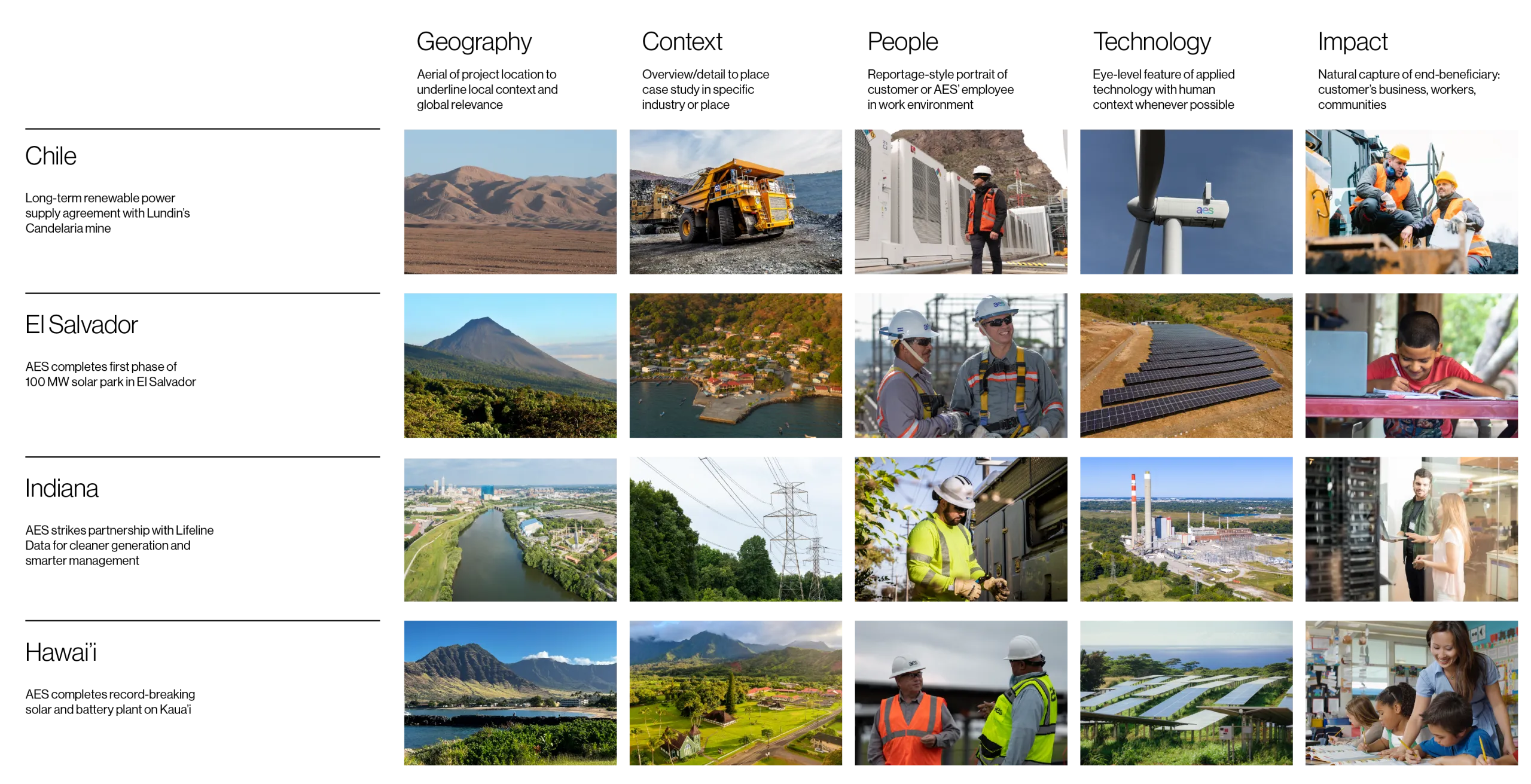
Art direction
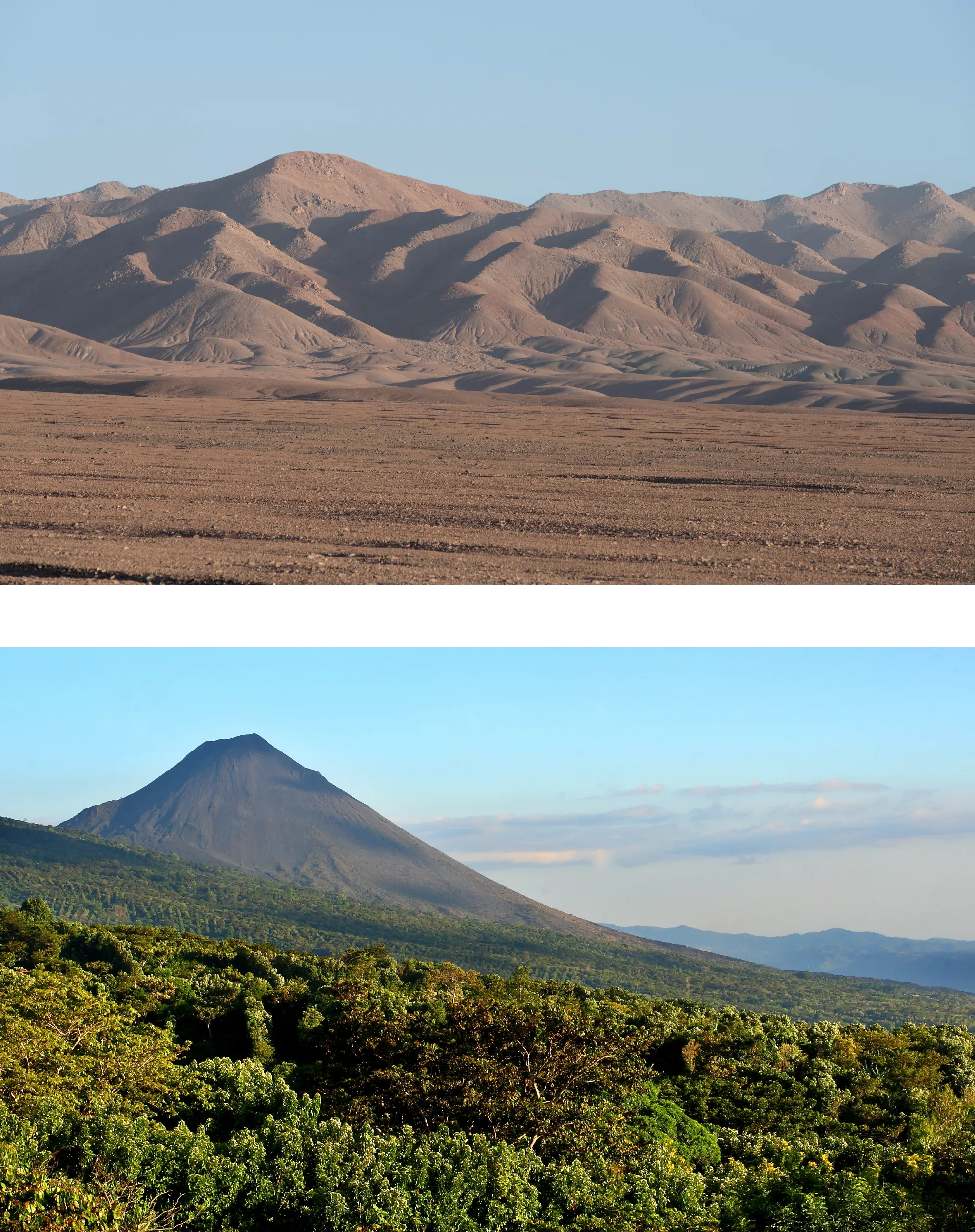
Geography
We use landscape photography to demonstrate the range of geographies we operate in. The scapes should be region-specific.
Question to ask: how do we depict the uniqueness of the different terrains we operate in?
- Aerial short preferably at slight angle, flat from top optional
- Standard to wide focal length
Context
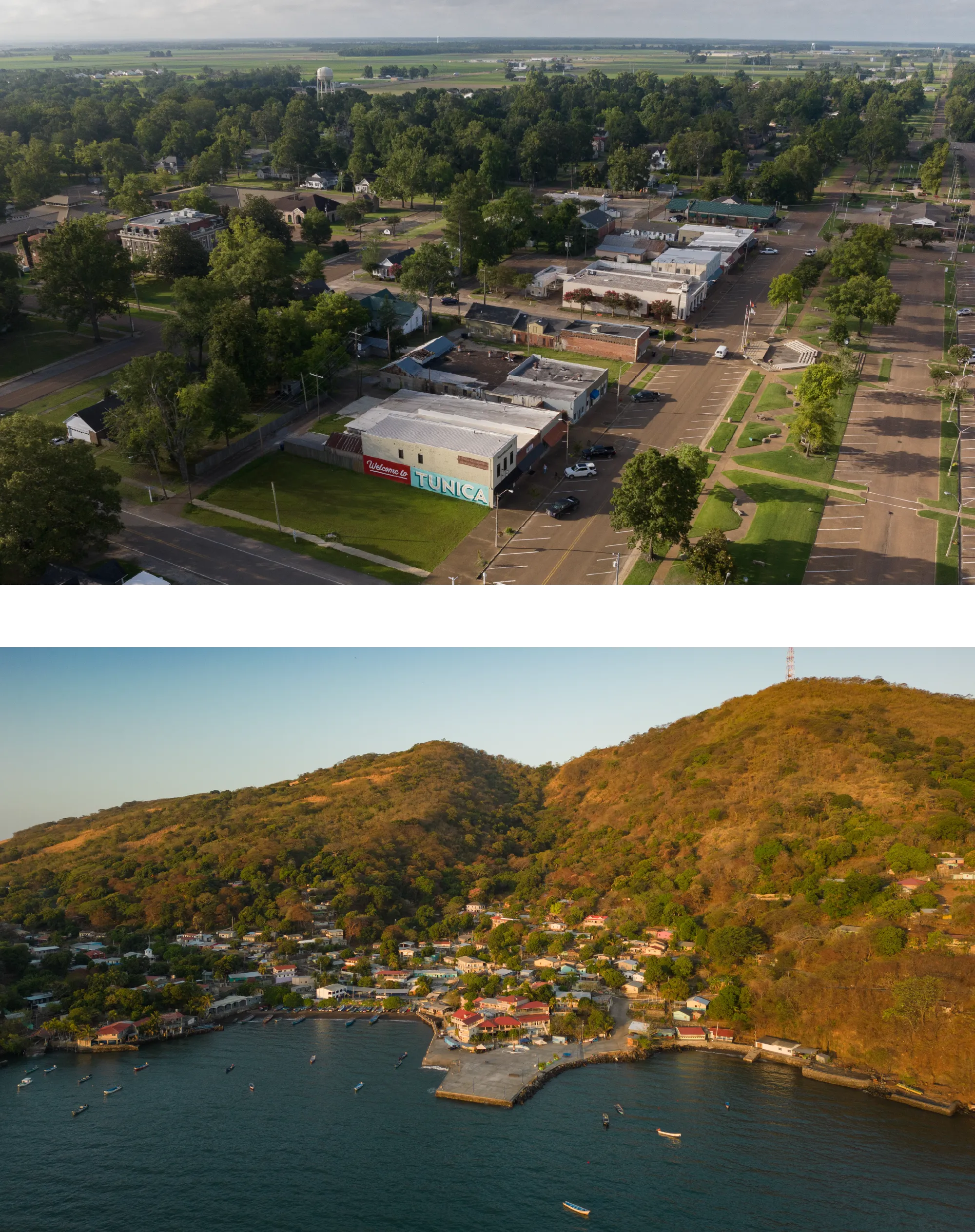
We use contextual photography to clearly visualise the areas we operate in. By using two different approaches, photography is able to flex to the varied use cases of what we do.
In order to use photography to depict context we can use different approaches that can flex to do justice to the varied use cases of what we do. (e.g. providing energy to a community, versus powering a datacenter).
Question to ask: how do we clearly communicate the area we operate in?
Medium
- Aerial short preferably at slight angle, flat from top optional
- Standard to wide focal length
- Shot at a medium range so that the specific context can be identified (e.g. village, city)
- Compared to wide shots, this photography is linked to the people benefitting from our work and so should hint to the energy that will be used (e.g. buildings)
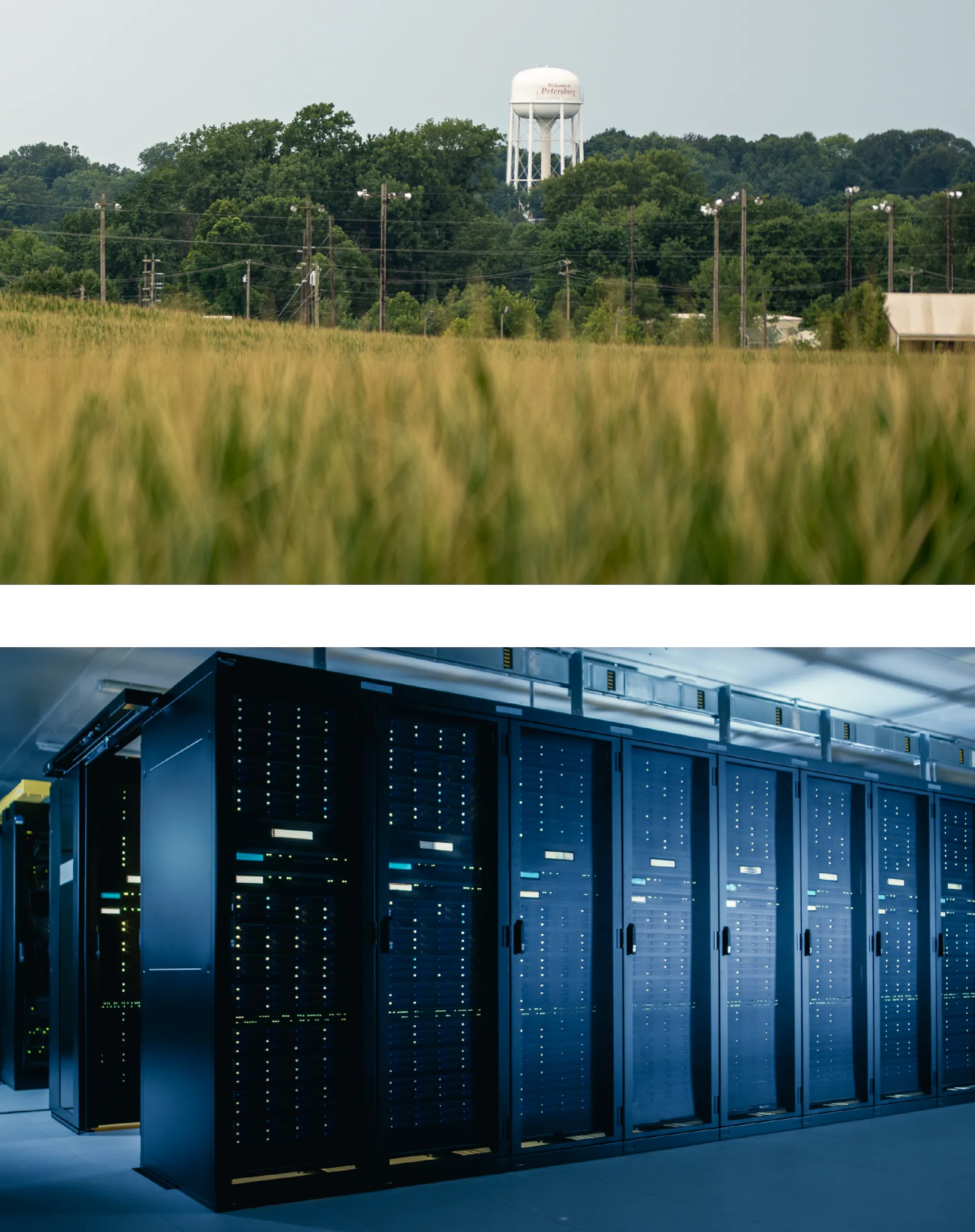
Close
- Textural photograph
- As close-up as needed to set specific context (e.g. a mining facility needs a wider shot compared to a data center, which from above, would not be instantly recognisable)
- Natural light preferable
- Standard to telefocal length to create a shallow depth of field
People
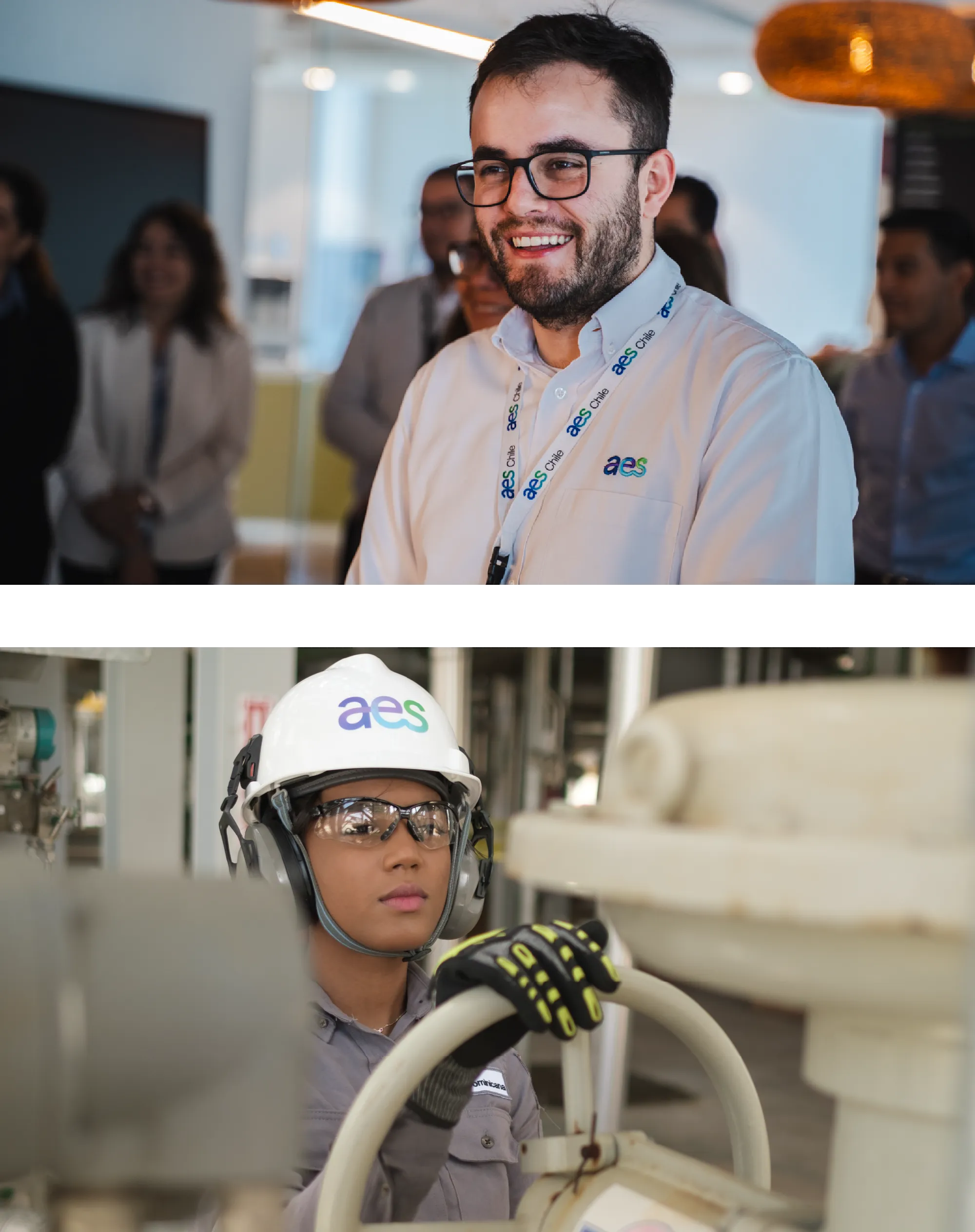
We use photography of our people to humanize our brand. It visualises our promise to transparency, accountability, and approachability.
Question to ask: who are the people working with or for AES that make our projects a reality?
- Human POV
- Depict groups of people collaborating where possible
- Standard focal length
- Not facing camera
- Natural light
- Surrounding helps to set context
Technology
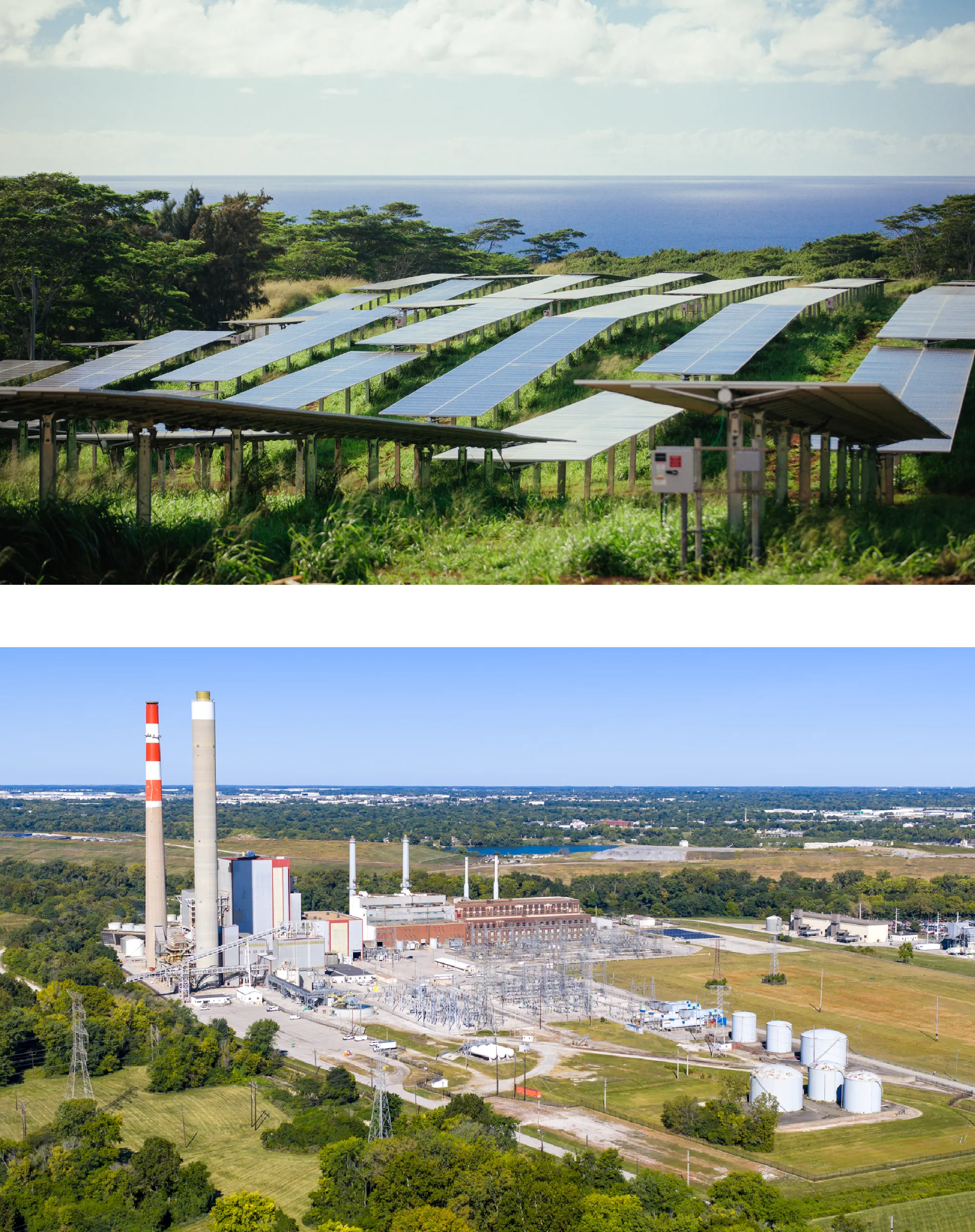
We use photography of our technology to not just show impressive scales, but also to show how people work within the environments. We depict our facilities, generation sites, etc from a human POV to show them as approaching and how they are integrated within the surrounding community.
Question to ask: how do we create photographs that portray technology without highlighting a potentially overwhelming scale?
Wide
- Standard to wide focal length
- If included in shot, people are not facing the camera
- Images do not to convey sheer scale of technology but instead how people are experiencing it from a vantage point
- Link to landscape for context
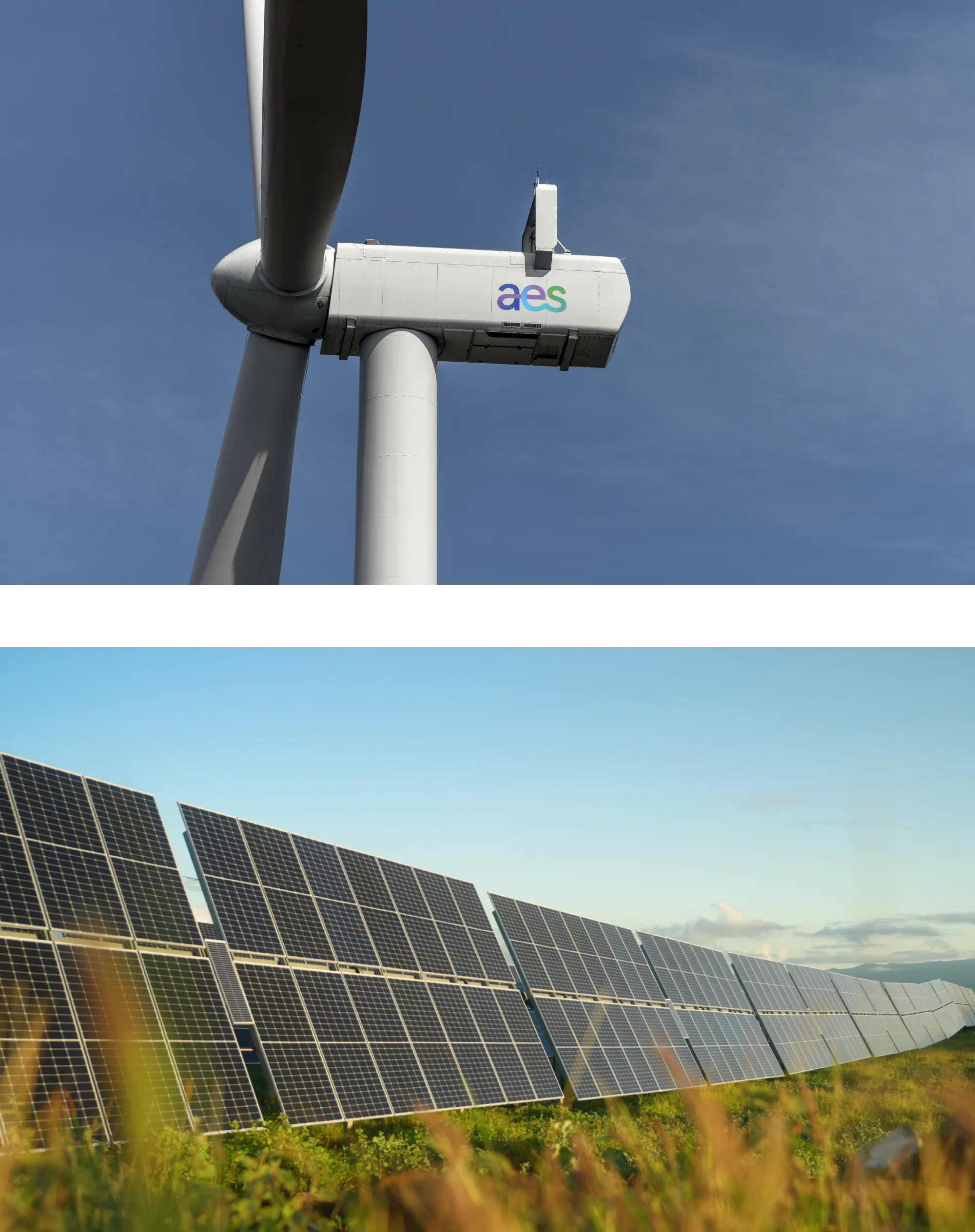
Close
- Standard to telefocal length to focus on how people experience the technology
- If included in shot, people are not facing the camera
Impact
We use photography to showcase the impact of our work. By photographing the employees of our B2B customers and members of the local communities we’re showing the positive impact we’ve had on their lives.
Question to ask: who benefits from our work on the receiving end?
- Human POV
- Standard focal length
- Depict groups of people where possible
- Not facing camera
- Natural light
- Surrounding helps to set context
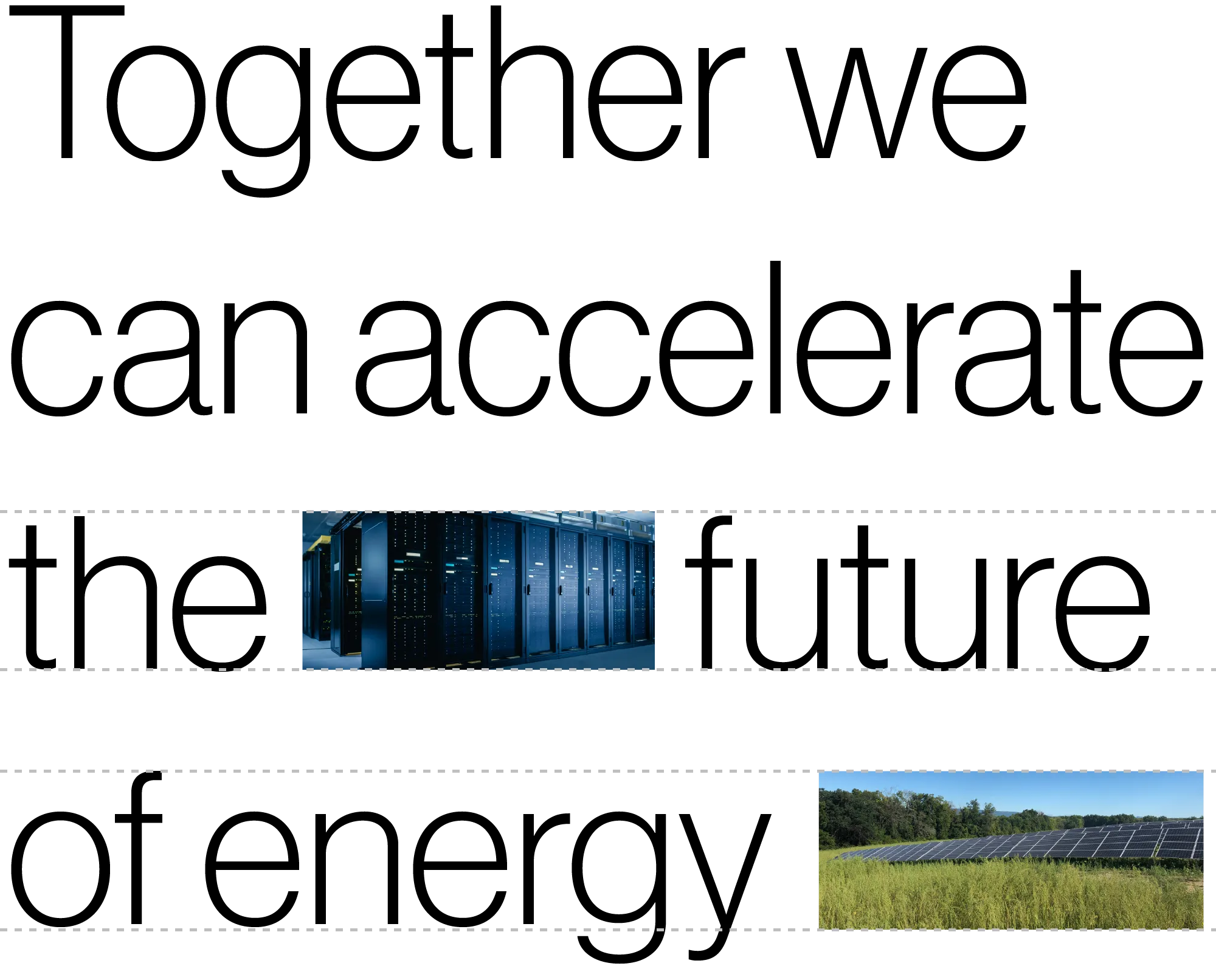
Aligned with text
Like gestures, images can also be aligned within headlines. Unlike gestures, images can also be placed in the center of line.
The height of the images should correspond to the height of the text.
Do not inset gesture-image combinations within text.
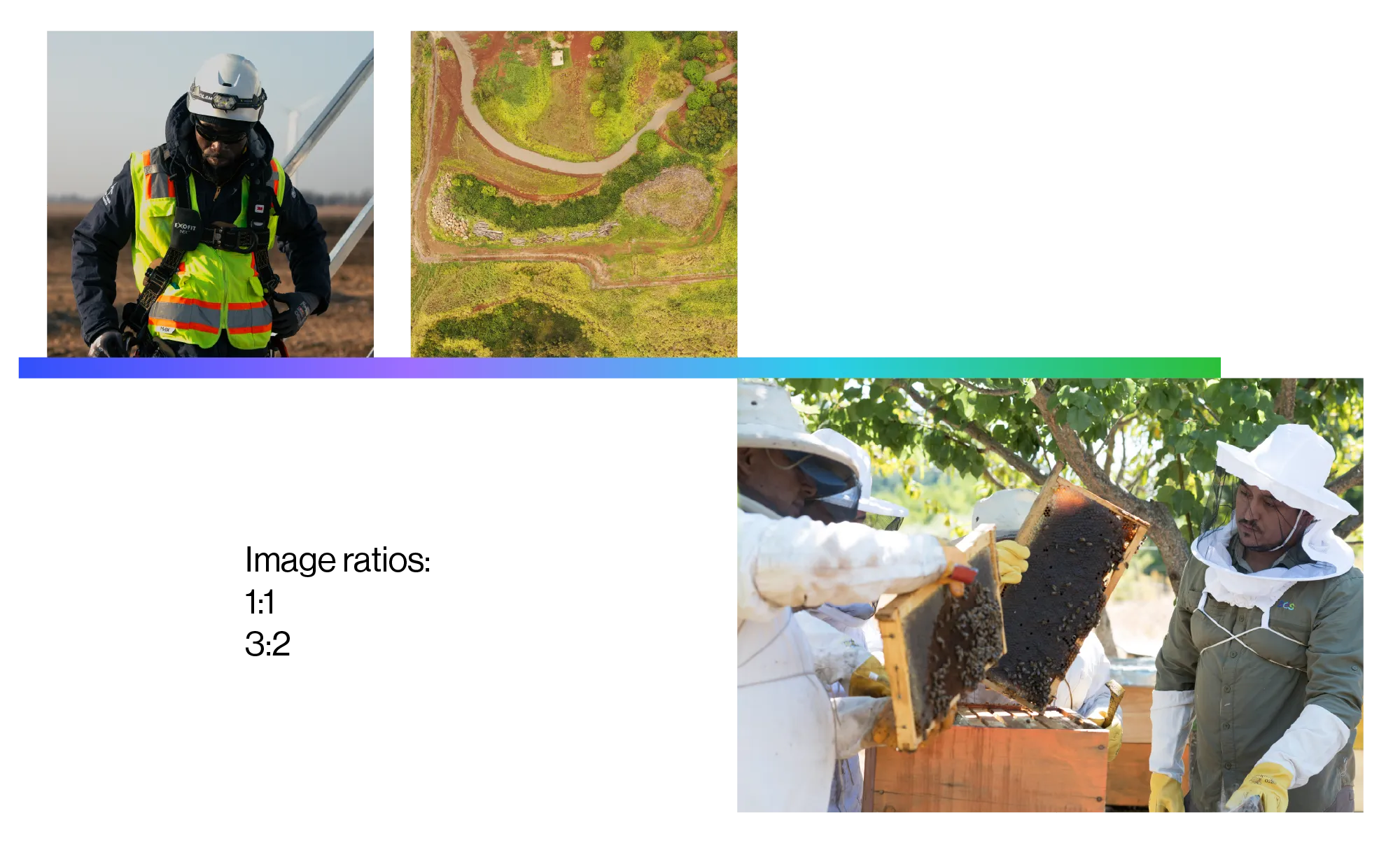
Aligned to line
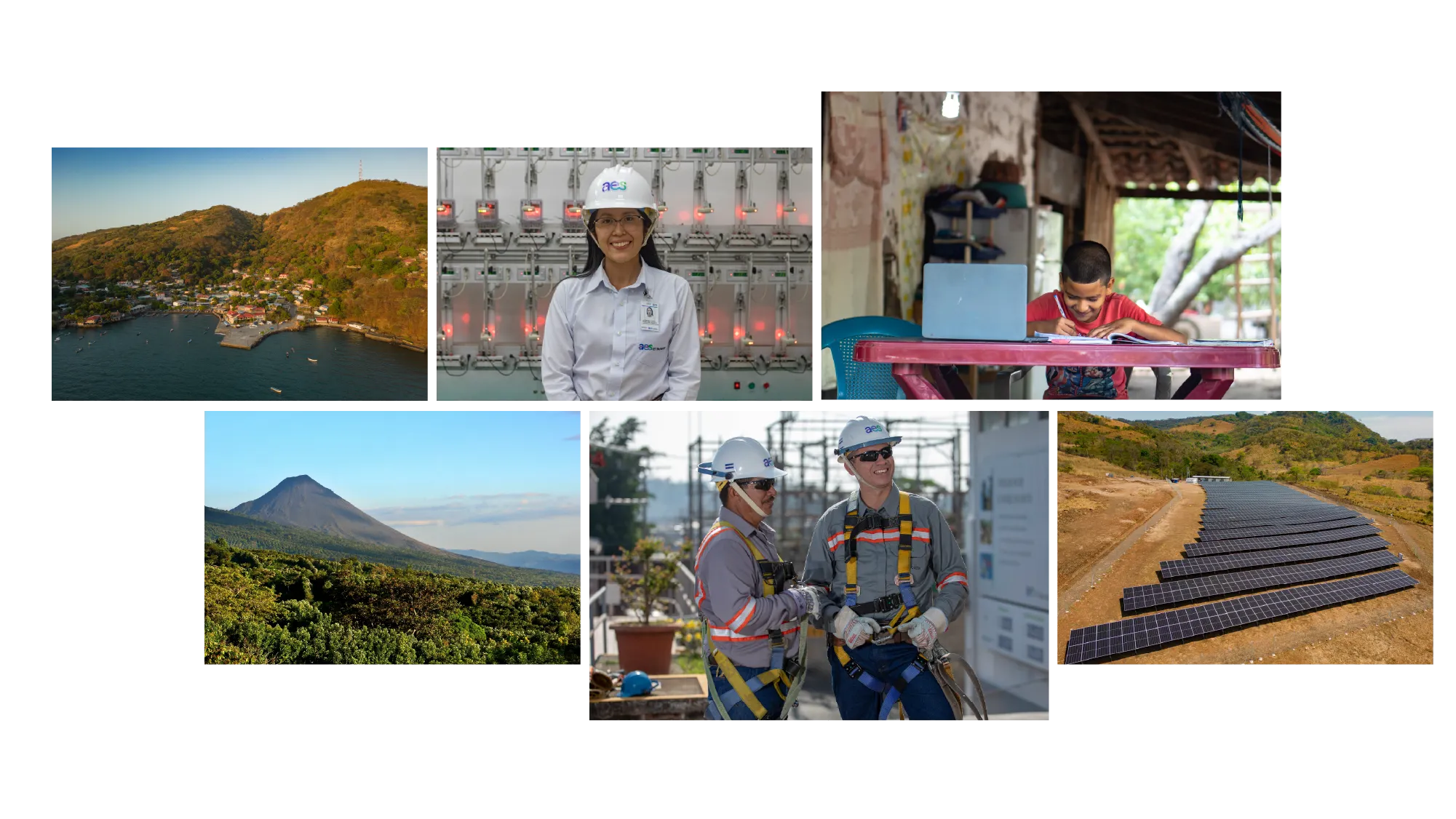
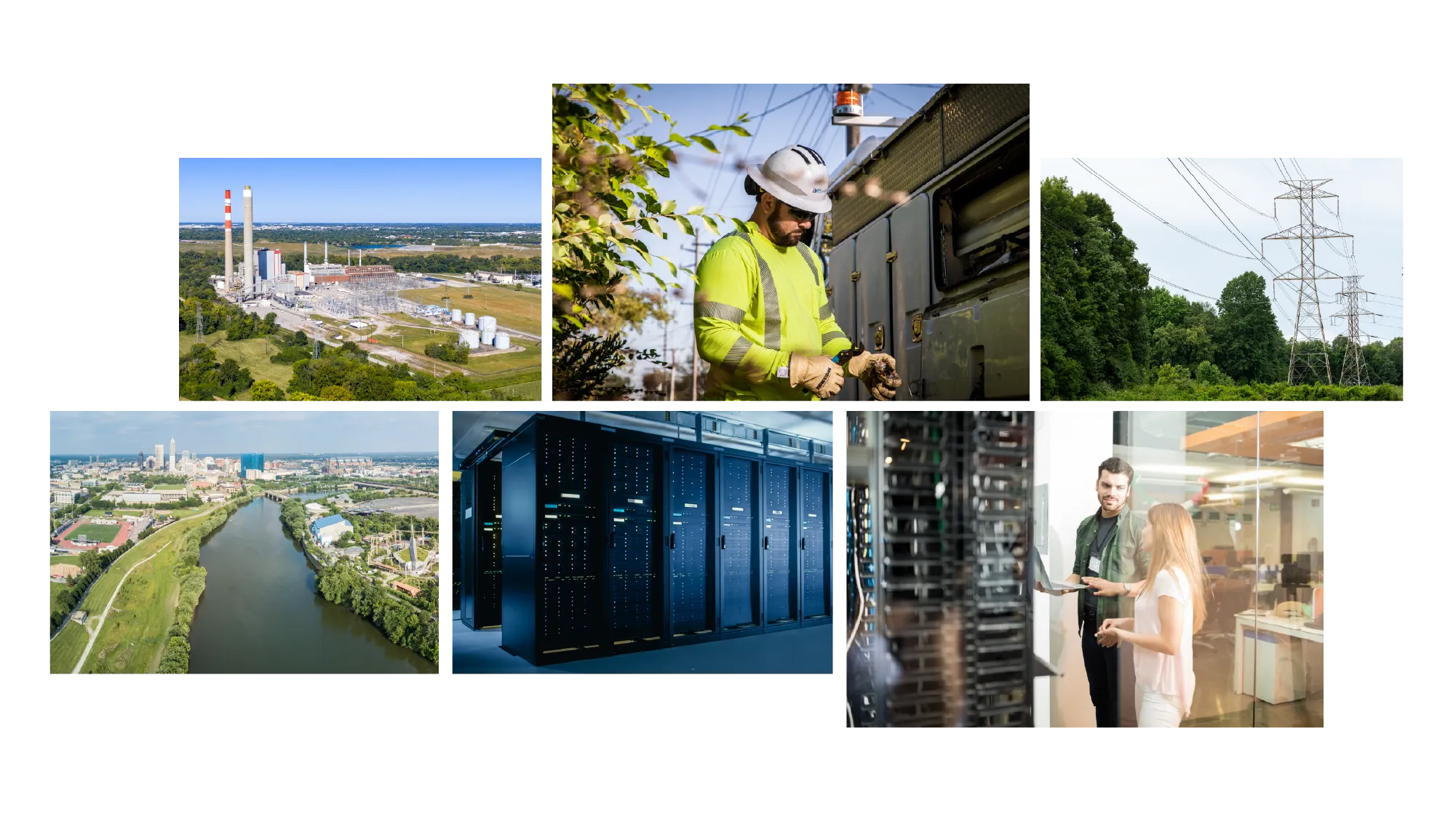
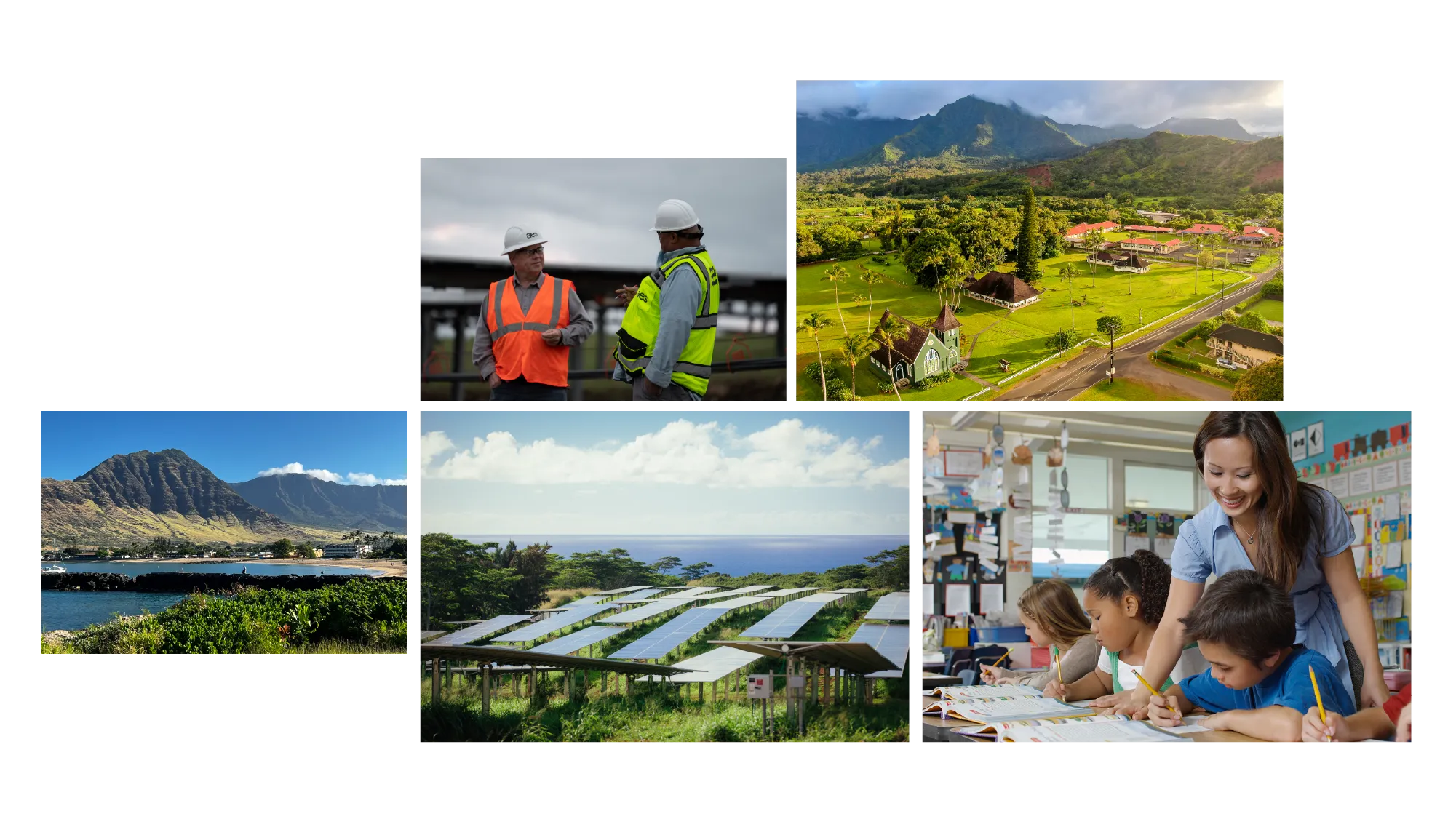
If using multiple images, we recommend aligning them to a line. The images can be positioned in any order on the line, but should look to include images from the different categories (geography, context, people, technology, impact). Ensure that at least one image features a human aspect.
Images can be full-bleed but if using more than two images, look to restrict images to only two or three different aspect ratios so as not to over-complicate composition. Shown left are two images at a 1:1 ratio, and one image at a 3:2 ratio.
Case study treatment
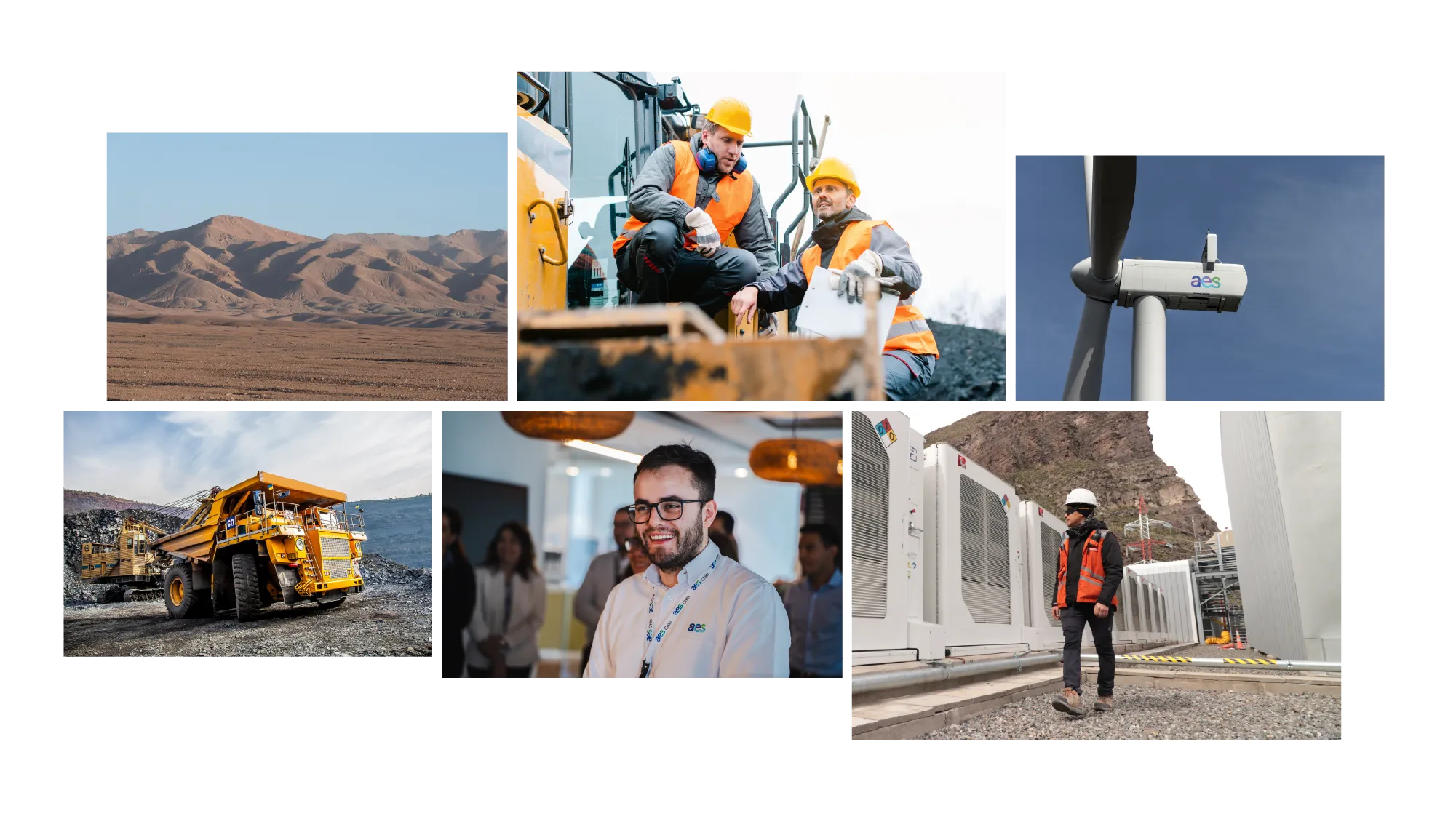
Incorrect usage
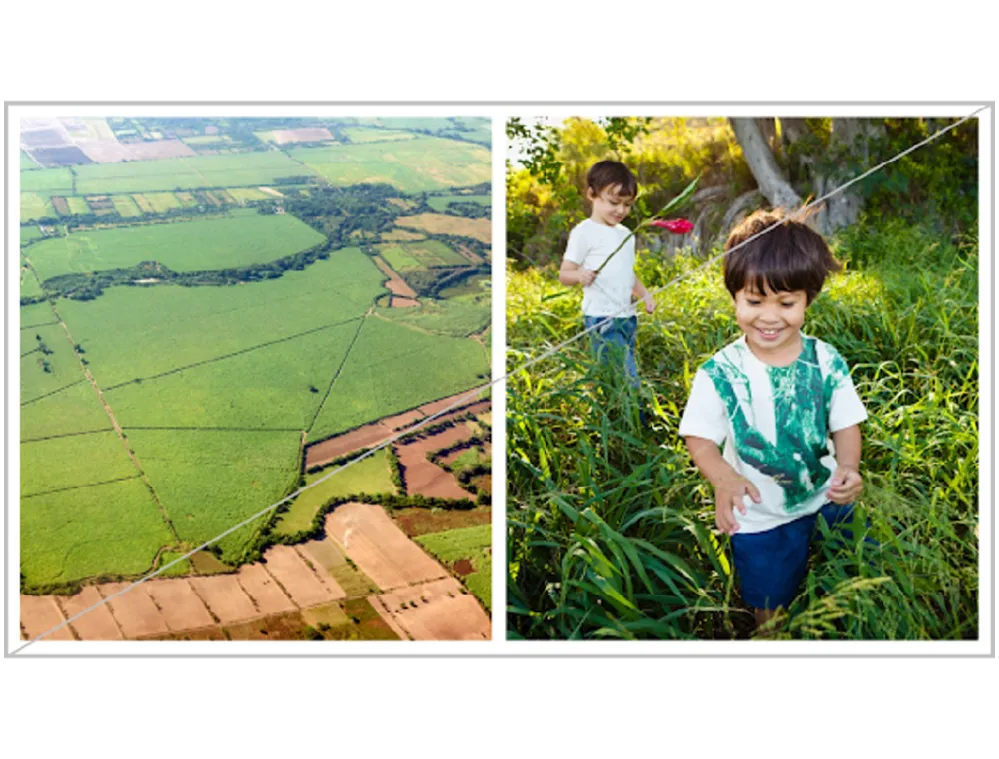
Do not mix images from different case studies.
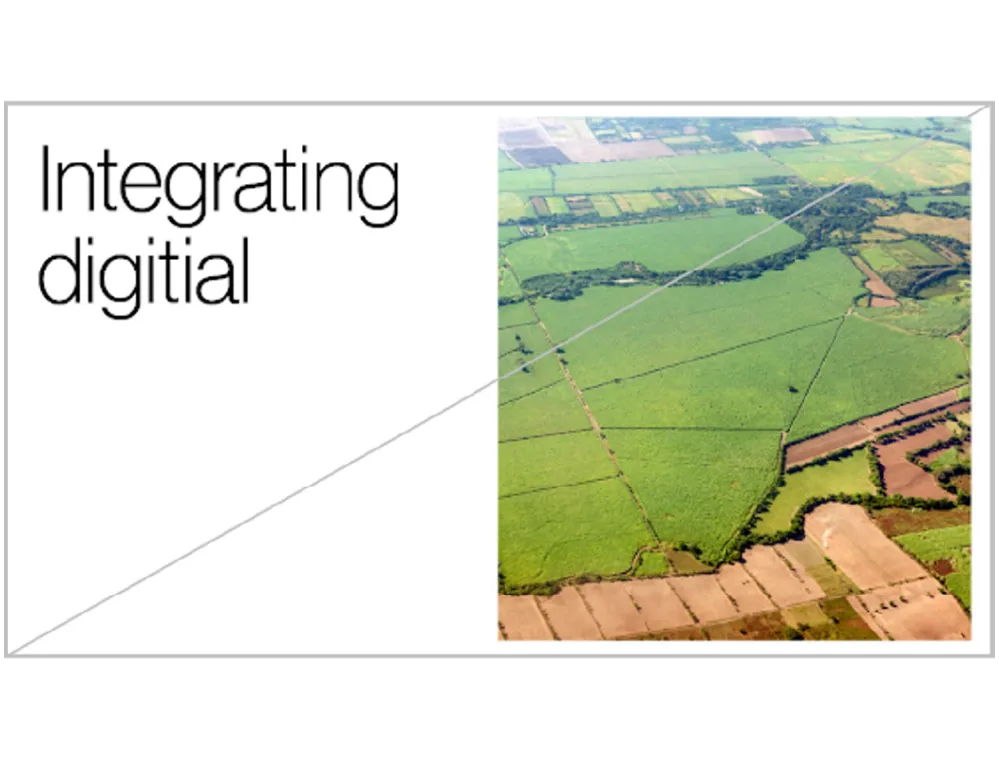
Make sure images are relevant to message.
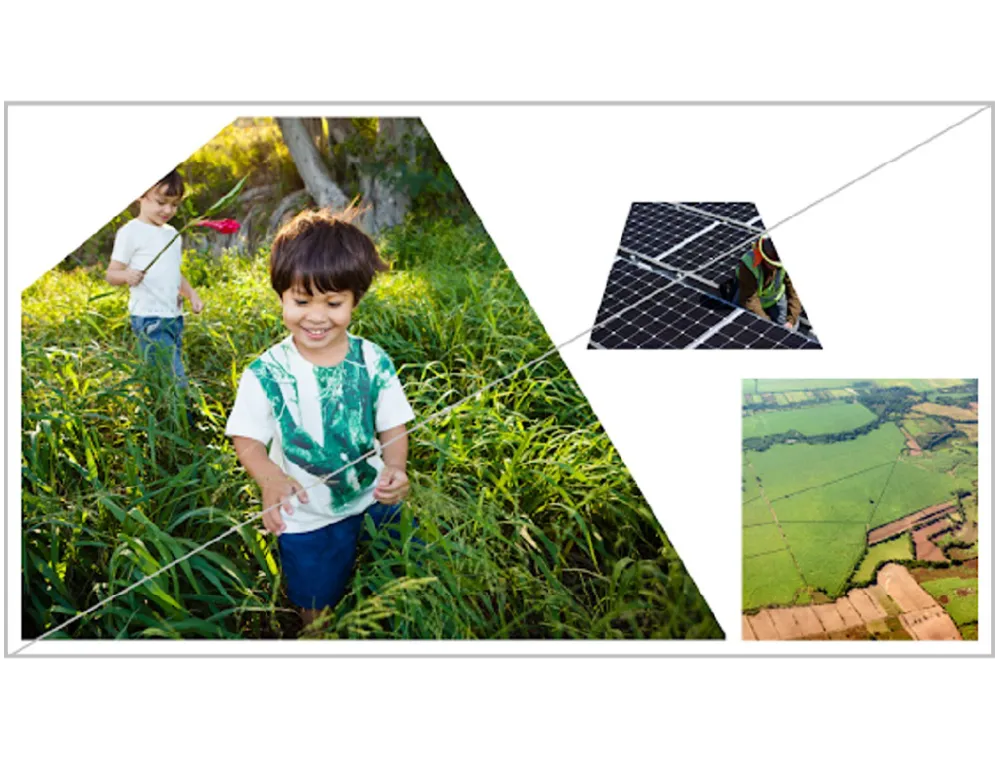
Do not crop images irregularly or in more than three aspect ratios for one composition. Do not crop faces.
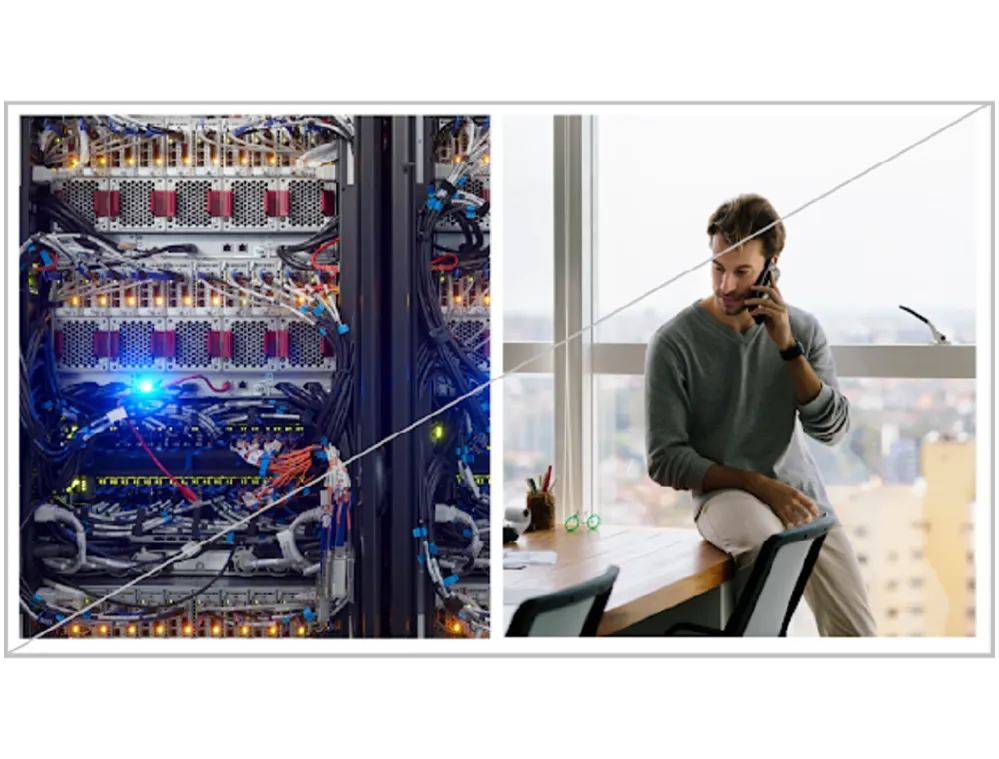
Select visually complementary images that use similar tones.
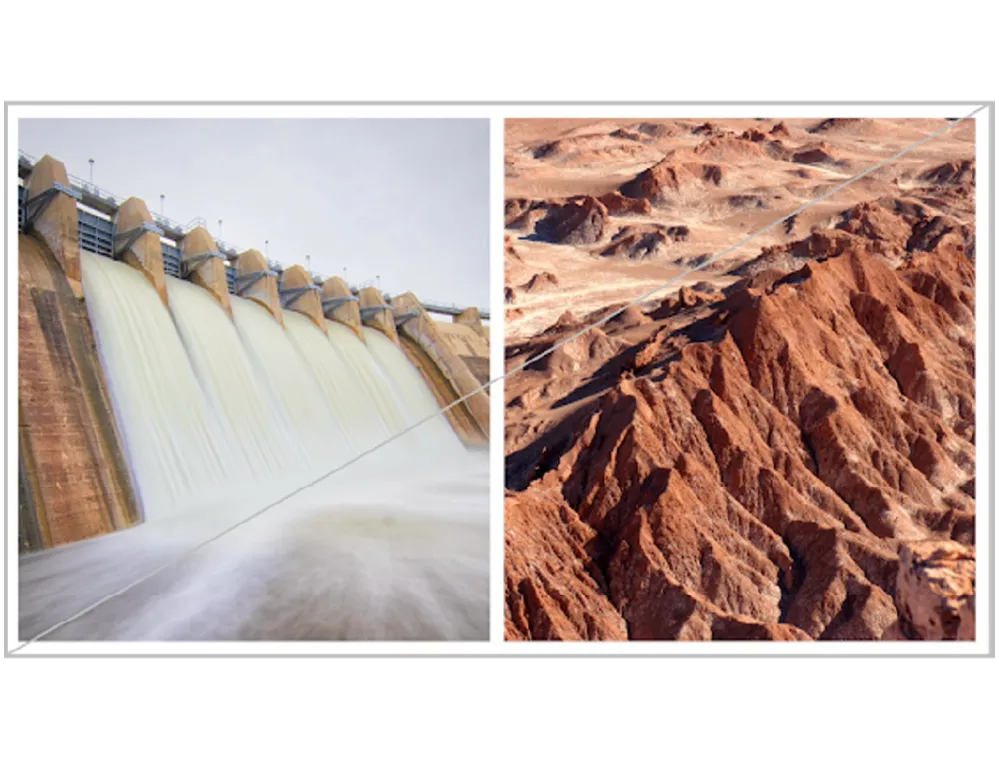
If using multiple images, ensure at least one image features people. Ensure images are from different categories.

Do not scale images disproportionately or add filters.
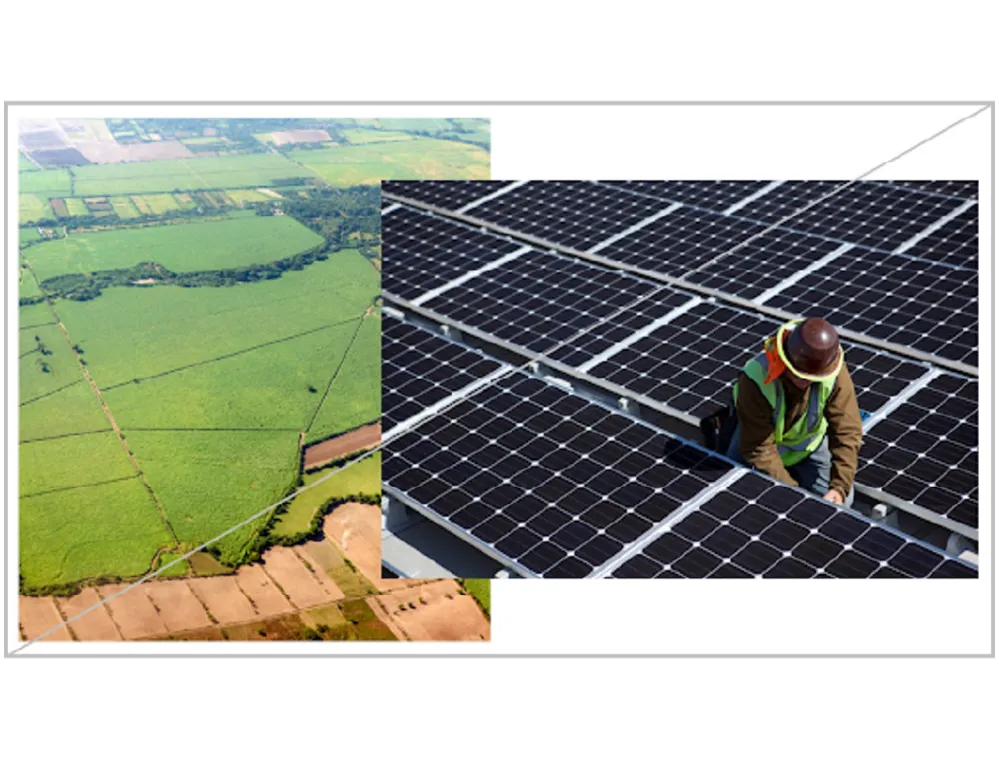
Do not overlap images.
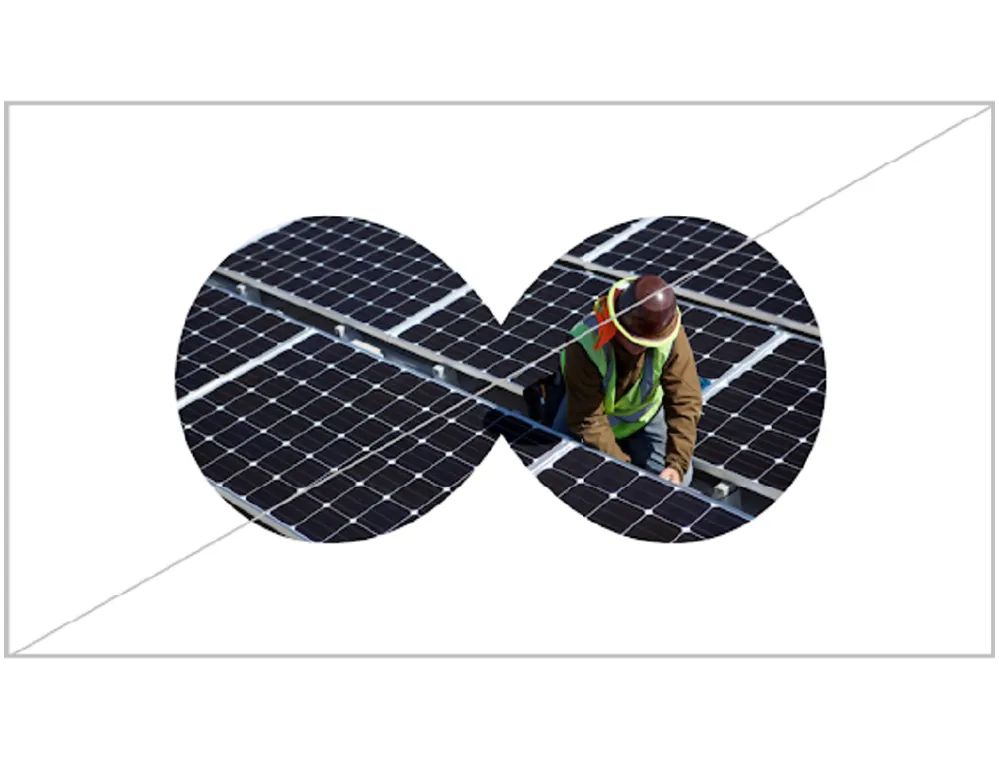
To not mask images into complex shapes.
